When Jake and Emily bought their five-acre property, they knew what they were signing up for — early mornings, muddy boots, and a long list of daily chores. What they didn’t fully anticipate was just how much of their time would be spent moving things.
Feed from the barn to the pasture. Water from the spigot to the animals. Tools from the shed to wherever something broke that day. It wasn’t the work itself that wore them down — it was the constant hauling.
Life Before the Electric Wagon
Like many small homesteads, Jake and Emily relied on wheelbarrows and brute force. Feed bags were carried one at a time. Water buckets required multiple trips. Stall cleaning meant dumping loads over and over just to keep up.
By the end of most mornings, they were already tired — before the real work even started.
“We didn’t think we needed more equipment,” Jake said. “We just thought that’s how homesteading worked.”
The Turning Point
After a particularly long winter, the wear started to show. Back pain. Slower mornings. Projects getting pushed off because they felt like too much effort.
That’s when they decided to try the
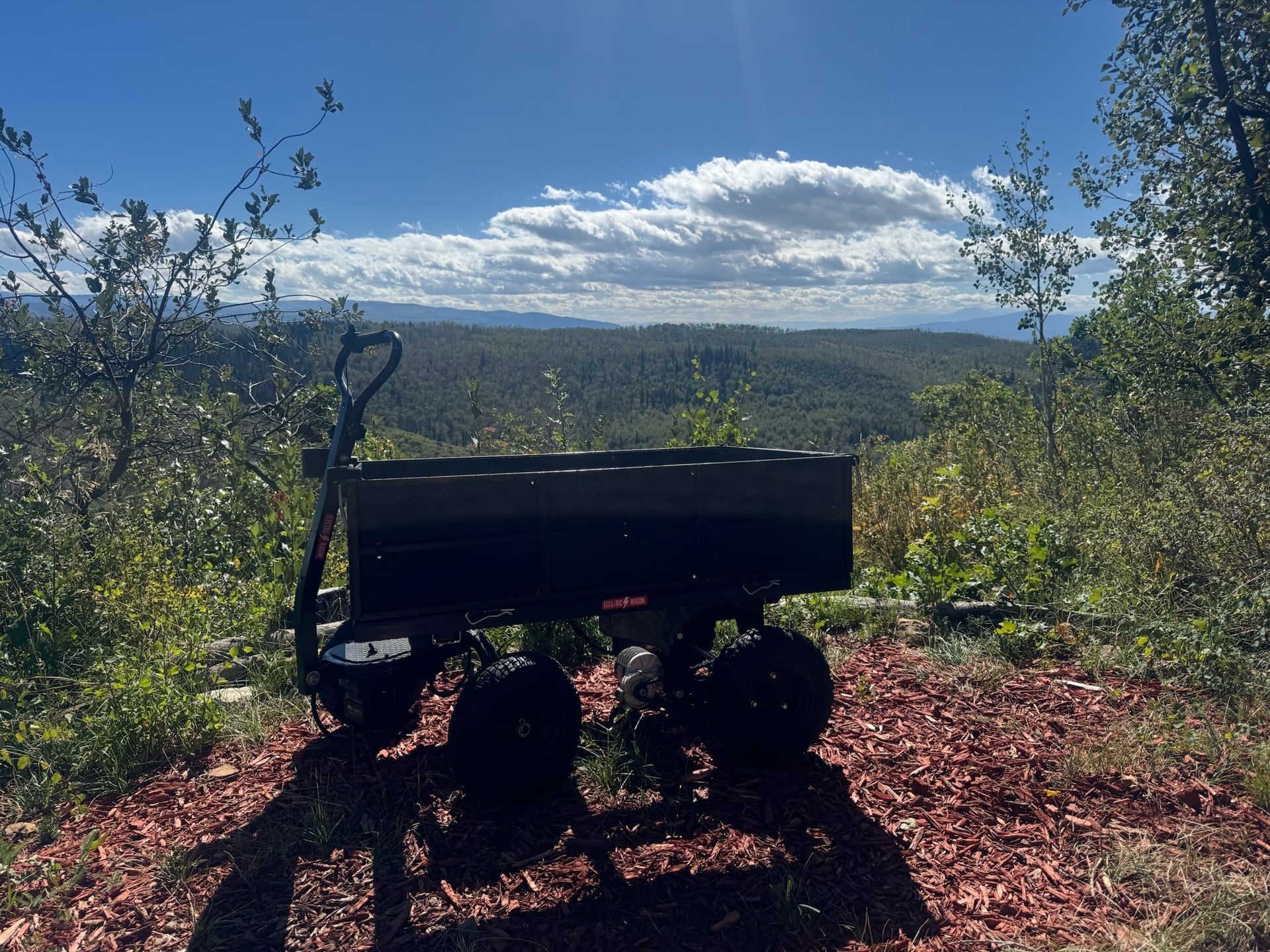
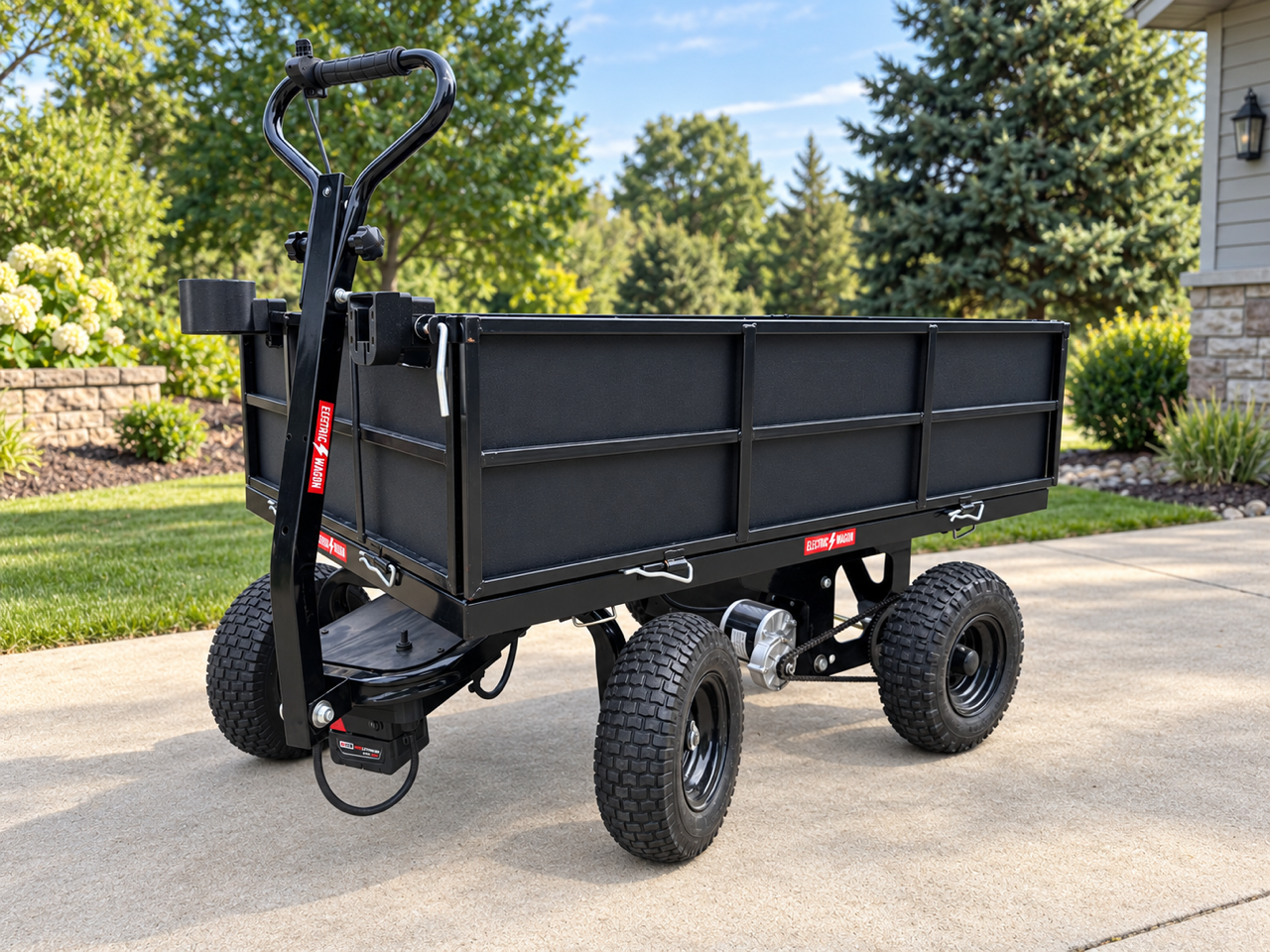
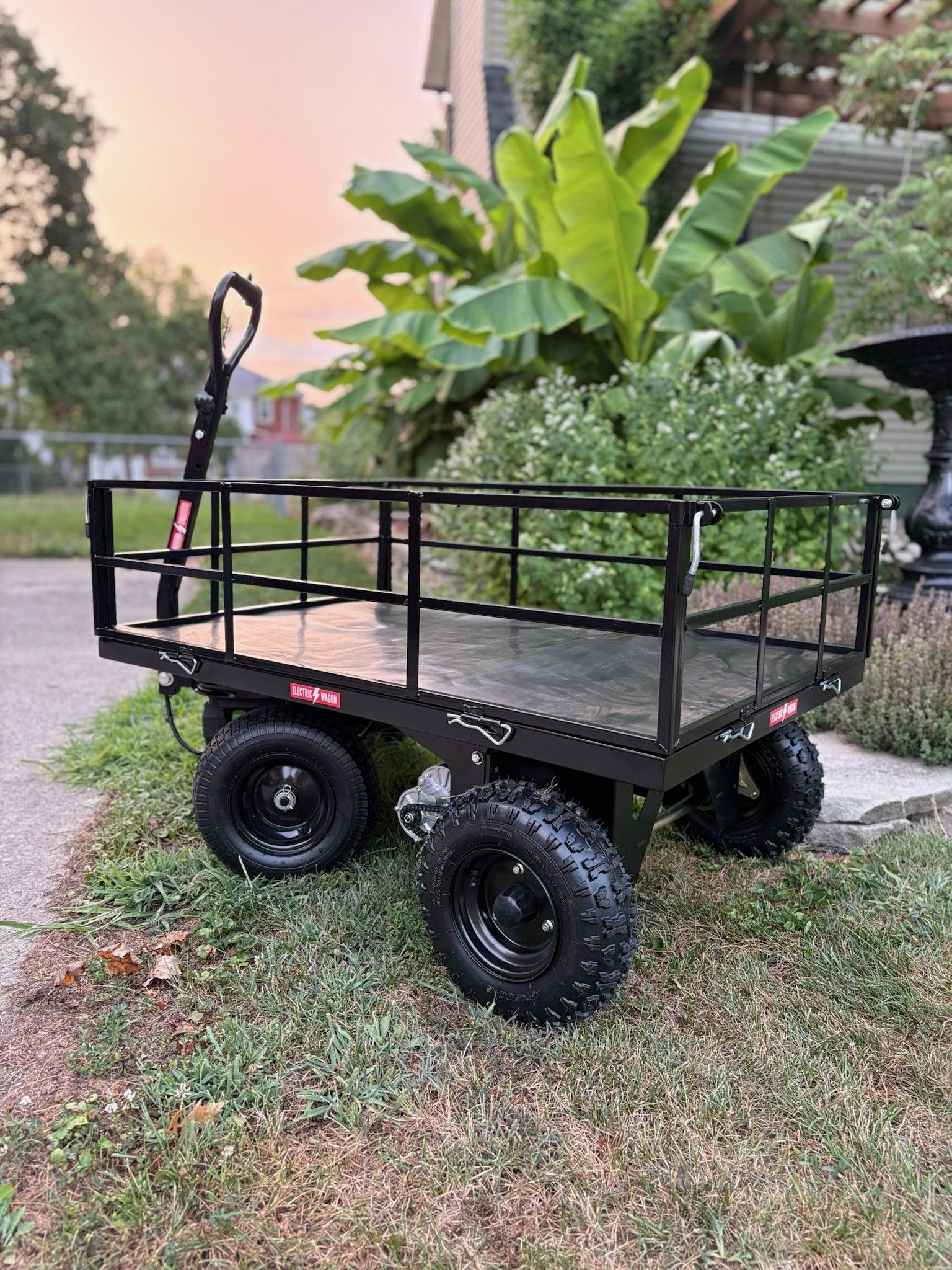
Electric-Wagon — not as a replacement for bigger equipment, but as a tool for everyday chores.
They weren’t expecting it to change much.
They were wrong.
How the Electric Wagon Changed Daily Chores
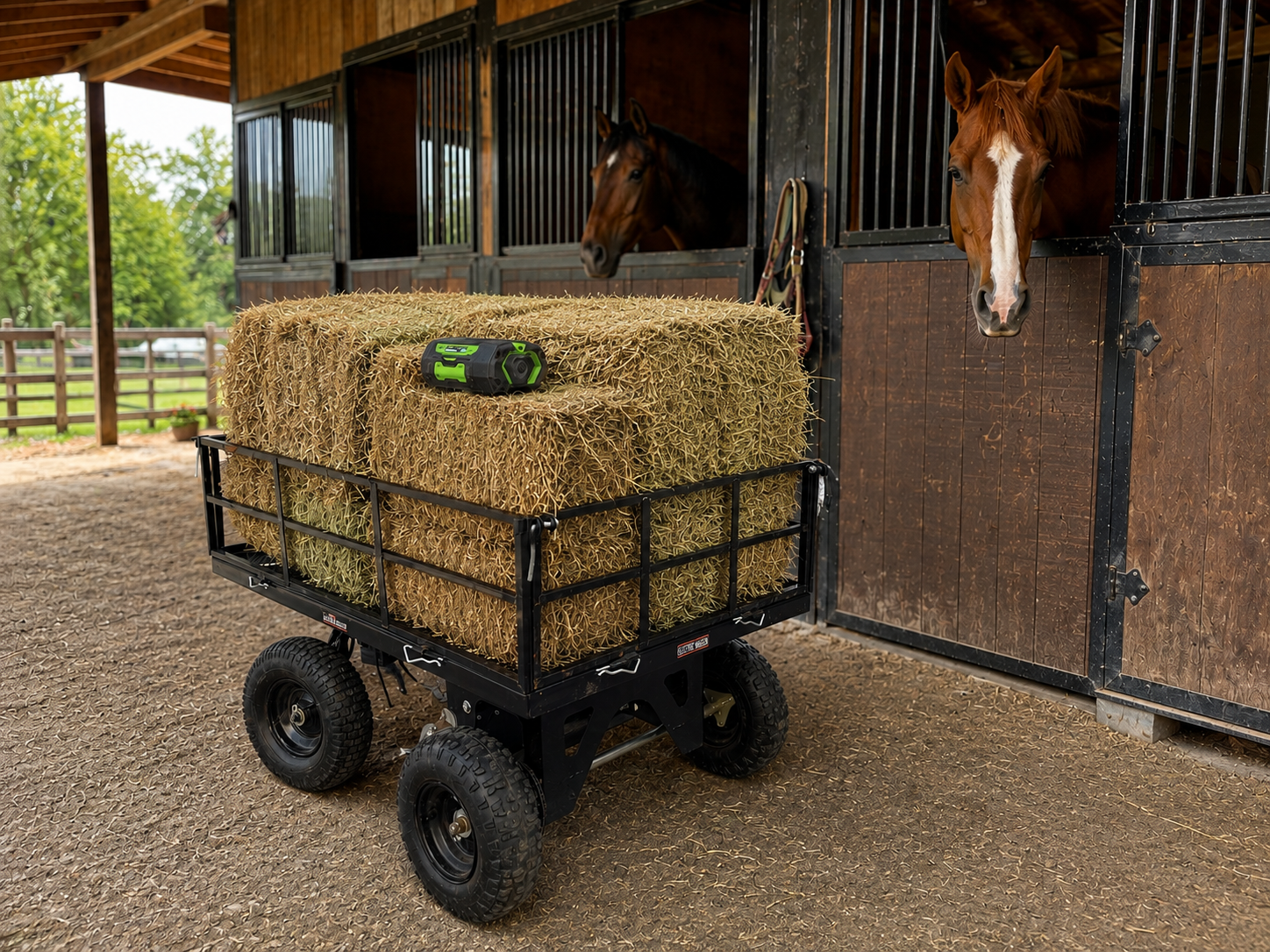
The first task they tackled was the daily feed run. Instead of carrying bags by hand, they loaded everything onto the wagon and drove it directly to the feeding area.
“One trip instead of four,” Emily said. “That alone sold us.”
Soon it became part of every routine:
- Feed and mineral runs were faster and quieter
- Water buckets moved without strain
- Stall cleaning took fewer trips
- Tools stayed together instead of scattered
The wagon became the default solution whenever something needed to be moved — which was most of the time.
Less Fatigue, More Progress
What surprised them most wasn’t just the time saved — it was the energy they had left afterward.
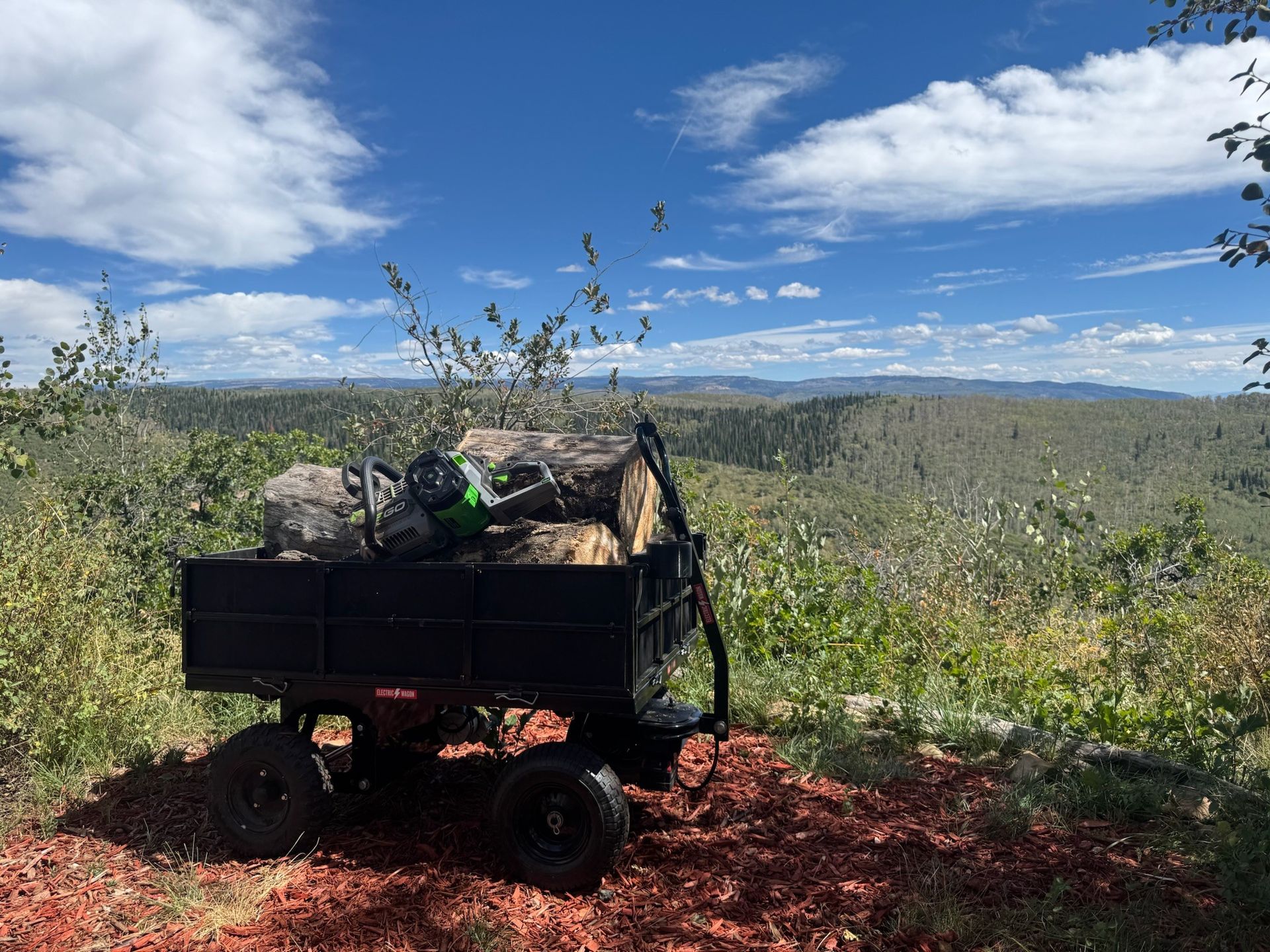
By removing the constant lifting and pushing, they were able to tackle projects they had been putting off. Fence repairs happened sooner. Garden beds got expanded. Firewood was moved before it became an emergency.
“The work didn’t feel smaller,” Jake said. “It just felt manageable again.”
Built for Real Homestead Conditions
Their property isn’t flat or polished. Gravel driveways, uneven pasture ground, muddy spring conditions — the Electric-Wagon handled it all without issue.
Because it runs quietly, animals weren’t stressed. And because it’s electric, there was no gas to store or engines to maintain.
“It fits how we live,” Emily explained. “Simple, practical, and ready when we are.”
A Tool That Earned Its Place
Within weeks, the Electric-Wagon stopped feeling like a new purchase and started feeling like a necessity. It lived near the barn, not tucked away in storage.
“It’s the first thing we grab,” Jake said. “If it’s heavy or awkward, it goes on the wagon.”
Why It Works for Small Farms and Homesteads
For small operations, efficiency isn’t about speed — it’s about sustainability. Tools need to protect your body, save time, and work across a wide range of tasks.
The Electric-Wagon does exactly that. It doesn’t replace tractors or ATVs. It replaces unnecessary strain.
The Takeaway
Homesteading will always involve hard work. But it doesn’t have to involve unnecessary exhaustion.
For Jake and Emily, the Electric-Wagon didn’t change what they did — it changed how long they could keep doing it.
And on a small farm or homestead, that makes all the difference.